
Google Pixel 10 Pro Review
The Ecosystem Phone
It’s been years since I could recall a phone made by Google being relatively competitive in the spec sheet realm. The brand new Google Pixel 10 Pro does not break that mold. However, what I have come to accept and even expect from the search giant is a specific way of life. While reviewing phones that are not Pixels, I quickly find myself feeling out of place even though they’re all Android devices. As soon as I got back onto the new 2025 Pixel model, I knew exactly the direction this review would be directed towards. The Pixel 10 Pro is an ecosystem phone first and foremost. It isn’t an Android ecosystem that I’m talking about either. I’m stuck in a Google ecosystem that only a Pixel branded phone can solve.
Purchase Price: $999
Leave An Arm Behind
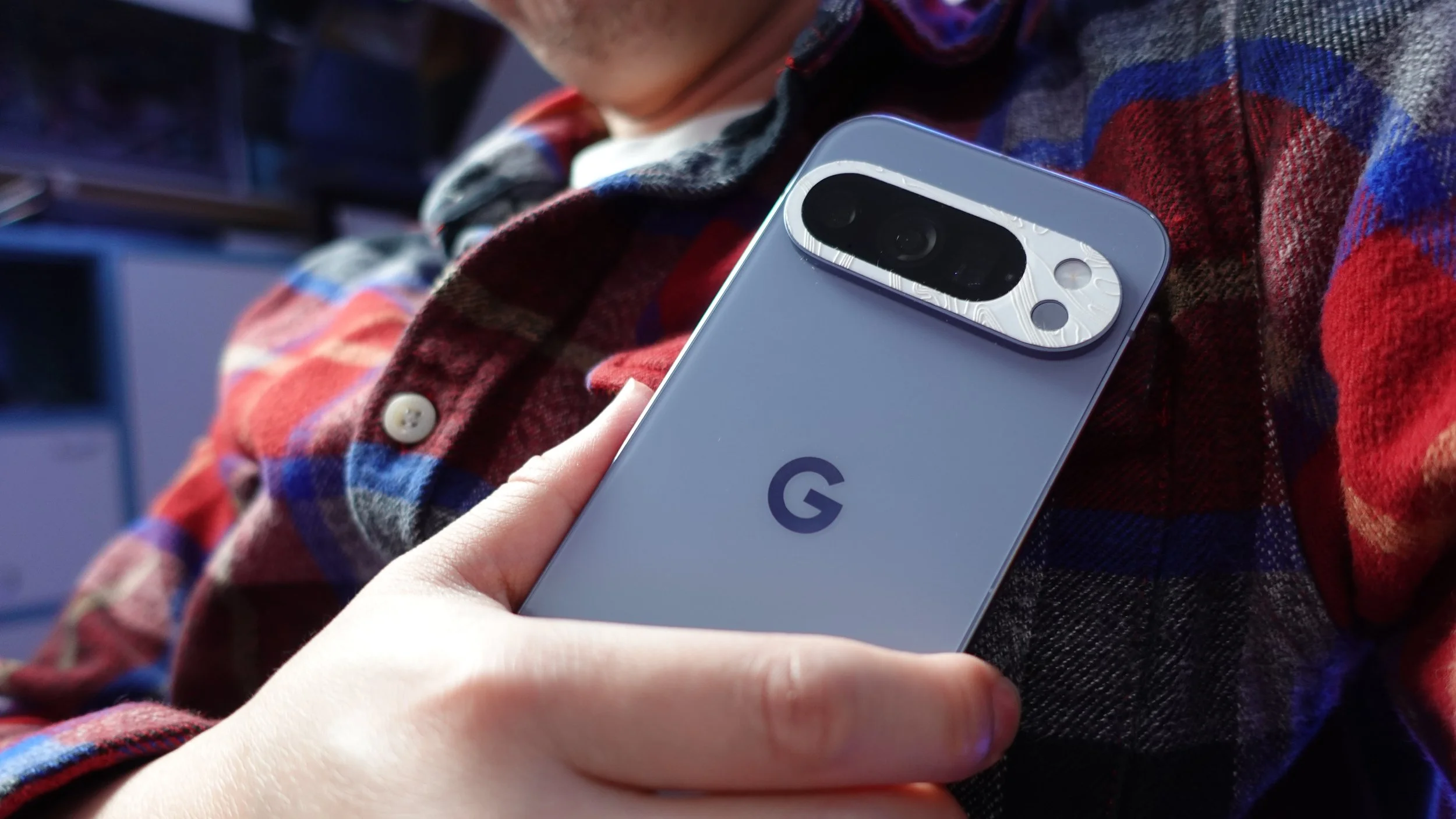
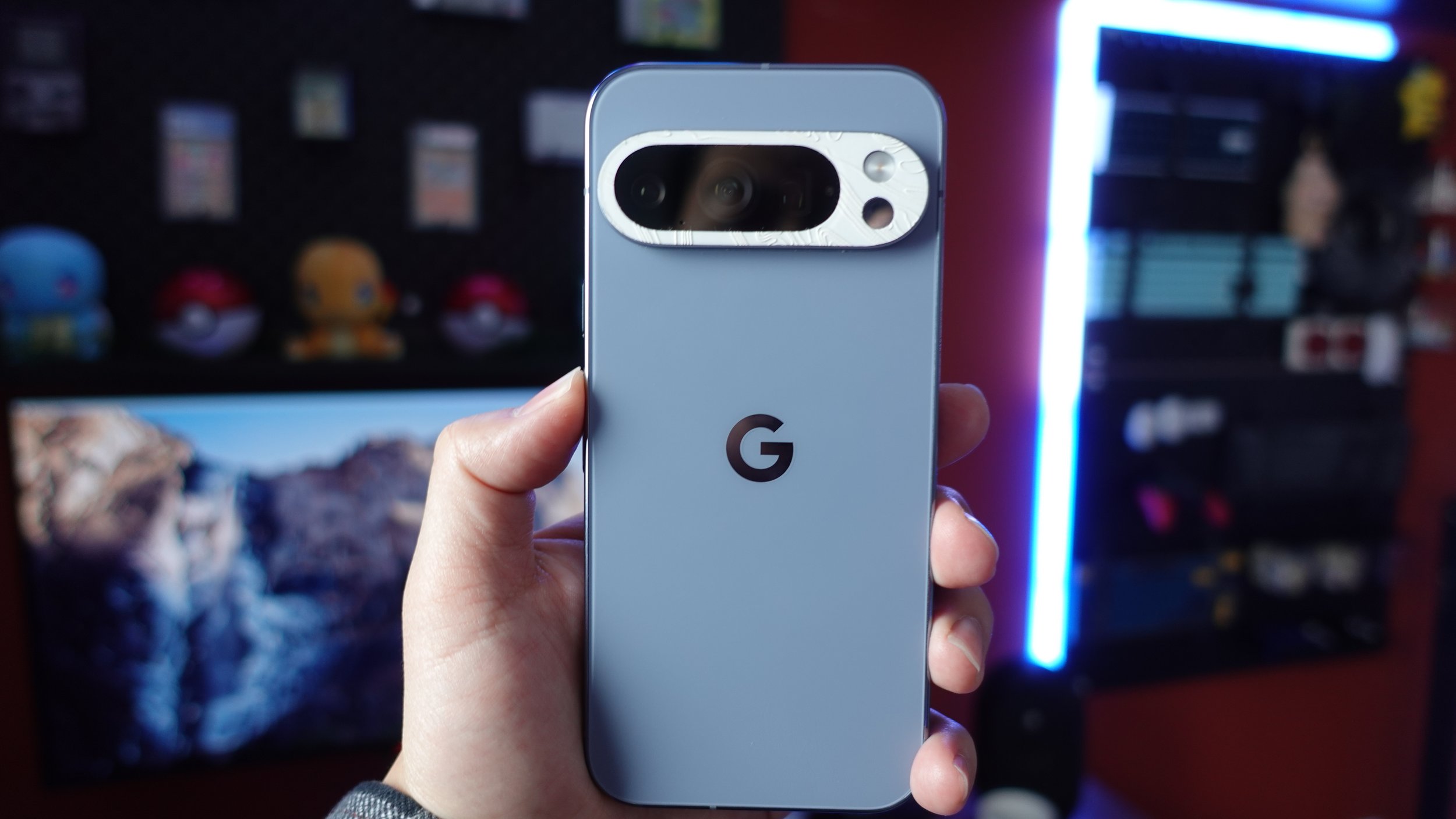
Let’s start off with the same ordeal people debate about every single year– the Pixel 10 Pro uses Google’s Tensor G5 processor and our model– as well as all other models– has 16 GB of ram supporting it. This base model only has 128 GB of storage and like previous years there’s no microSD card slot nor is there a sim tray anymore. This is a fully eSIM operating phone. I’d rather use my physical Nano-SIM, but that’s the way the market has moved towards and it does make for an extremely clean frame layout as there’s only three buttons, a USB-C port, and two speaker grills on the entire frame.
The Tensor SoC remains a controversial topic for many internet forums, and while this isn’t the fastest phone I’ve reviewed, I do think it does fine as a flagship level option. There’s a sense of a fluid operation through Android 16 on this Pixel 10 Pro that I don’t necessarily feel on other flagship Android phones. The subtle haptic feedback when pulling down menus in unison with the ascending gaussian blurring of the home menu just makes the user operating experience feel like a premium show. I didn’t notice any particular slowdown points during my review period with the Pixel 10 Pro, but I did see a couple lockdown scenarios where the phone would prevent any further interaction with it until I cleared all the background apps. They’re minor annoyances that happen here and there that aren’t ideal, but it wasn’t close to a breaking point for me in regards to complaining about the G5.
The Pixel 10 Pro doesn’t handle mobile gaming like a flagship phone should though. The highly publicized switch from ARM to Imagination Technologies’ PowerVR DXT-48-1536 GPU isn’t as rough as many online would have you think. Yes, you can run every mobile game on the Play Store about as smoothly as one can hope for on medium settings. There’s no real performance or graphical issues that I could see playing through various games. Most importantly, the frame rates were plenty playable for graphically intensive games and they stayed consistently smooth throughout my time playing. The Pixel runs warm relatively quickly while gaming though. It’s sometimes unacceptably warm. Here is the main issue plaguing the Pixel 10 Pro’s reputation– while it’s sufficient enough to run things, it's obviously lagging behind other competitors in this price tag. Nobody likes to feel like they're getting the wrong end of the stick on expensive purchases. I think it's fair to say that if getting the best gaming performance out of a smartphone is your priority– the Pixel 10 Pro isn’t the optimal choice.
-
6.3-inch 1280 × 2856p
OLED display
120 Hz Refresh Rate
Android 16/ 7 Updates
Tensor G5 CPU
16GB ram
128 GB of storage
4,870 mAh battery
In-Display fingerprint sensor
Pixel Exclusivity
So then you may be asking if pure operational performance isn’t the selling point of a piece of technology like this, then what makes me crave going back onto a Pixel? That’s what I had to really ask myself when I couldn’t wait to get the Moto Razr Ultra (2025) out of my hands for this new Google phone.
The first thing I really missed was just how advanced Google’s call receiving structure was. Every phone maker is taunting AI down consumers' throats to make it seem like you have a personal assistant in your pocket ready to take down notes and answer calls for you. No one does it as well as Google. From the auto spam declines, the pre-screening, and the question conversing it does with unwanted callers– all of these functions are bar none in the smartphone industry right now. I’m not even exaggerating slightly right now. As a smartphone reviewer for nearly a decade, I’ve reviewed so many phones from essentially every single brand. Google Pixel’s spam screening is light years more intuitive and effective than its closest competitors. While you technically could emulate something similar using apps or other OEM’s equivalent, the Pixel’s spam screening is effortless. It doesn’t require any setup. It’s just there and it just works immediately when the phone boots. I can’t stress just how big of an everyday game changer this feature has been over the years– especially for younger and older consumers. That’s one of the reasons I recommend Pixel phones to those demographics of people when they ask me what phone works best for them.
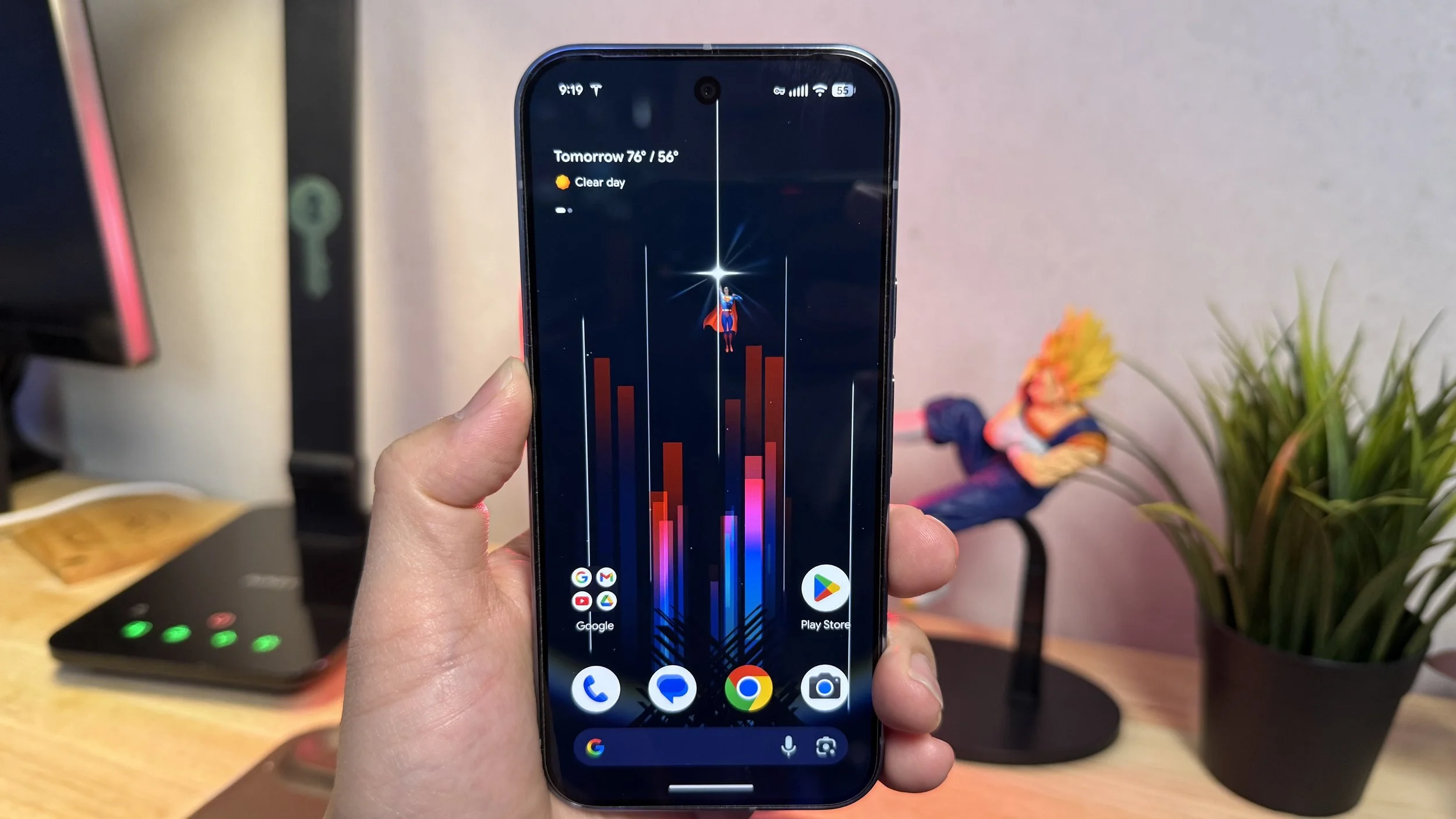
The Pixel 10 Pro has a 6.3-inch display
The other no setup required feature I keep going back to on a Pixel is a VPN. Don’t get me wrong, I’m still absolutely disgusted with Google for shamelessly dropping the One VPN service that used to come with a One subscription, but Pixel owners do have a built-in Pixel VPN service that is handy to have. It’s not great, nor does it give you flexibility and versatility to do certain things you may want a VPN to do for you, but once again– it’s no nonsense and ready to go immediately. The VPN service I’ve been running for years now has had significant issues on phones like the Razr Ultra to the point where I had to simply stop using it for a while. It’s been a relief just not having to worry about a basic IP protection route being consistent.
On the photo taking front, a lot of the specialties that make a Pixel camera so great carry over to the Pixel 10 Pro. The Gemini AI assisted editing, the Video Boost feature, Magic Audio Eraser, Night Sight– these aren’t specifically unique to the 10 Pro, but are bound to the Pixel ecosystem. They’re experiences that I don’t realize are so vital to my everyday operation of a smartphone until I’m not holding a Pixel in my hand.
The Pixel 10 Pro is a refinement of exclusivity because that’s where the world of technology is right now. Physical hardware changes are no longer evolving like they were when the first Pixel was released. The software experience is the vital cog in selling modern phones and Gemini AI plays a pivotal part to everything Google does going forward now. No one currently has AI implemented as well as Google does right now. Take this Magic Cue feature that pulls up information from your email right into the phone app during a call the Pixel recognizes is related to the substance you’re about to discuss. Instead of physically opening up your email to grab booking information during your call, the phone truly acts as an assistant and presents you the information you needed without you actually needing to tell it to. That’s beneficial AI right there. I often complain about AI on phones that really don’t contribute much of anything to improve a user’s operating experience.
Google just gets AI… for now.
Added Benefits
Pixel owners get free access to VPN by Google
Other Pixel Staples
I’ve also come to expect just about the same exact viewing experience on my high-end Pixel phones. To my eyes, the 6.3-inch, 1280 x 2856p OLED display gives off about the same vibrant viewing experience as previous years. On paper the OLED panel is brighter than ever– hitting a peak number of 3300 nits. With a refresh rate of 120Hz and nearly 500 ppi (495ppi), I’d say many people will be quite happy with watching stuff on here. Viewing angles are terrific all-around, and the sharpness of text is phenomenal for my eyes. It’s a great display.
The under display fingerprint scanner is about as good as it’ll get for a scanner under glass. It’s quite reliably accurate and I don’t have anything to complain about here. Same goes for the face unlock. They’ve pretty much reached the peak of what this kind of tech will be in recent years and it’s more of the same on the 10 Pro.





Speaking of Pixel staples, the 10 Pro and the 9 Pro share identical hardware. Yes, the same 50 MP, f/1.7 wide camera, the same 48 MP, f/2.8 periscope telephoto, and the same 48 MP, f/1.7 ultrawide sensor. Google has definitely done this rinse and repeat before while touting any improvements to be software based. This year, the Pixel 10 Pro’s AI-driven processing is the main marketing material for Google to tout onto the general public. It’s a good camera once again, but I don’t see any generational leaps that have me jumping out of my seat. The phone does a great job at doing everything automatically. It auto-exposes for the right subjects 8 out of 10 times. It auto-focuses to the target 9 out of 10 times. Even the artificial blur is almost flawless at a glance. Where AI kicks in is helping the picture essentially process the mid-tones, the shadows, and things a person normally would edit on Lightroom. It doesn’t always hit right, but it does way more frequently than it doesn’t. Pictures are often “post-ready” for your social media accounts right off the camera app.
The Pixel cameras have been an amazing companion for the general consumer. Taking pleasing photos of your loved ones, your pets, your vacation spots, and of yourself– should not be restricted to an enshrined sense of a learned skillset. Photography is an artform, but phototaking should be accessible to everyone. That’s what Google does with Pixel cameras. Aside from Apple and maybe Samsung– and I’ve used so many smartphone cameras– I don’t really know of another OEM that can say this so effortlessly.
The 10 Pro has the same camera set as its predecessor
Charging Issues
Powering through with a 4870 mAh battery, the Pixel 10 Pro doesn’t have class-leading longevity or anything close to that. I find the battery life to be average and just barely acceptable. I’m looking at a consistent 13-15 hours off a charge with moderate adult work use. Lots of emails, article reading, video streaming, smart home controlling, phone calls, and text messages. Mind you this is also without any type of heavy gaming involved in the data. I’ve cut out all those gacha farming sessions I used to run in my daily routines for battery life checks. That should give you a good idea of the limited daily longevity the Pixel 10 Pro can potentially provide your own lifestyle with.
The experience is saved with fast 30W wired charging through the USB-C port. You can get 55% in around 30 minutes on the cable. Wired charging has been the only means available to me to get the phone charged fully. While the 10 Pro supports 15W wireless Qi charging, I’ve been running into a lot of charging issues through the wireless route. Even using Google’s own Pixel Stand, the phone refuses to keep charging up. This has nothing to do with adaptive charging routines, or the setting to limit a charge up to 80% as I’ve evaluated all combinations of these settings both on and off. I’ve even tested out multiple charging bricks with varying power capacities to eliminate any potential logistical compatibilities. I’ve charged with and without cases too.
The Pixel 10 Pro just decides to stop charging wirelessly in unpredictable patterns. One day it will stop charging at 60%, another attempt it will be at 48%. I would then run another day with the same parameters and it would charge to 92%. Soft resets don’t remedy the phone’s refusal to charge consistently either. I believe the phone is charging to a certain percentage and then discharging while still connected to the wireless peripheral.
Google put a lot of stock in marketing their Magsafe competition that they so adequately named Pixel Snap. Essentially what we’ve come to know as Magsafe from Apple, the magnetic connection is directly on the rear of the phone. Unfortunately, the same thing is happening with a direct magnetic connected charge. The Pixel 10 Pro just cannot charge up to 100% without the cable. From my limited knowledge of the 10 Pro’s internals, I do surmise this is more of a software hiccup than a hardware limitation.
Final Thoughts
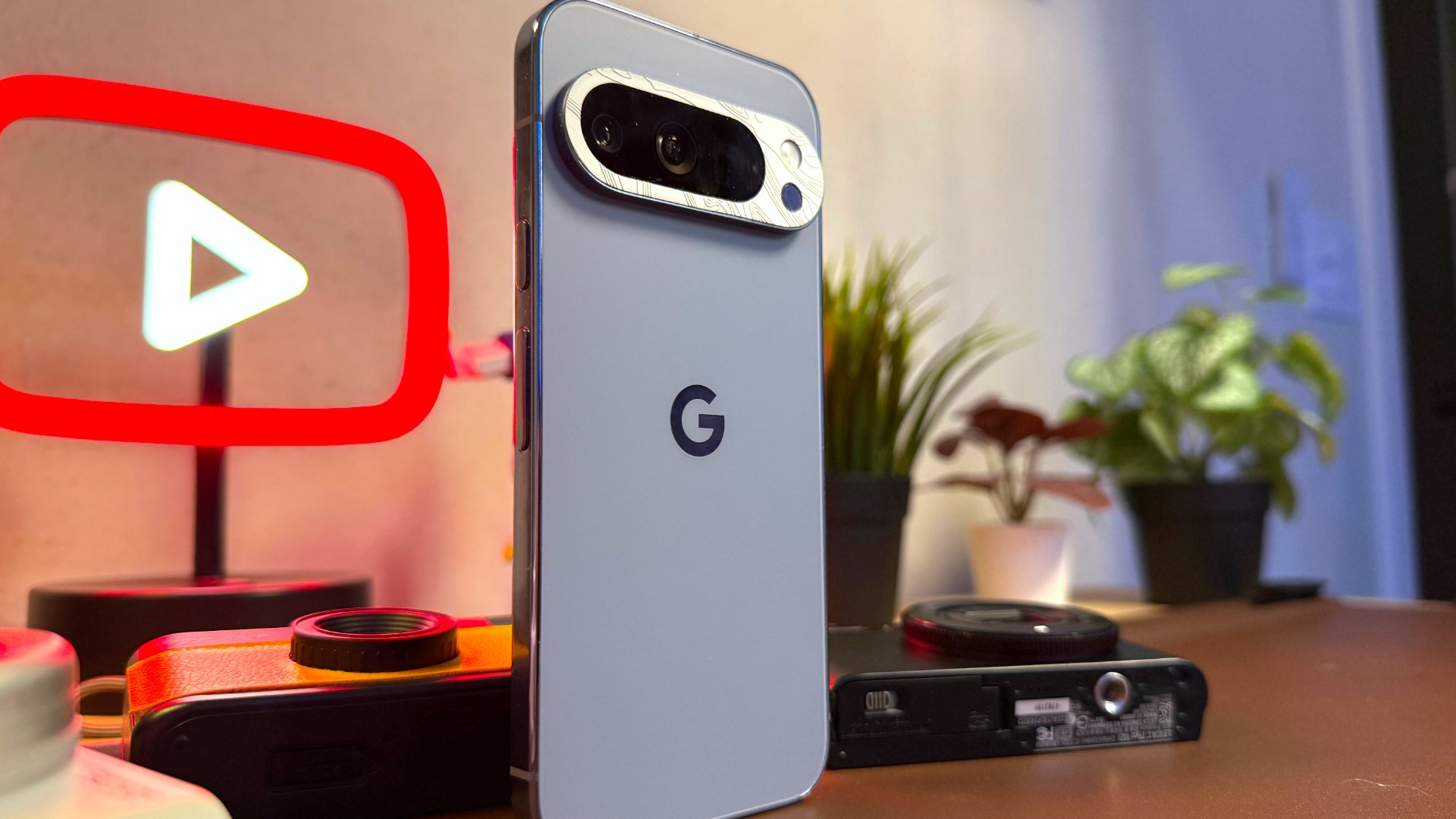
From a hardware perspective, I find the look and feel of the 10 Pro to be rather courtly. The phone just has a mature vibe behind it that oddly enough discarded the playfulness that previous editions of the Pixel lineup exuded.
Made with a glossy aluminum frame sandwiching Gorilla Glass Victus 2 on both the front and back, I do like the overall design of the phone. I have the Moonstone color that completely eliminates the flamboyant touch of brighter colors (remember orange?) that Google previously associated with their products. The entire vibe of the 10-lineup has matured and the build quality and presentation attributes to all of it. Speaking of maturity, there have been lots of vertical camera bars out there recently, but Google has been refining their camera bar for a few generations now. It still protrudes a bit more off the glass back than I would like to see, but it’s not too bad with a slightly thicker case evening things out so that it can lay flat on its back.
With Pixel phones, everything harkens back to Google. From software support to new Android implementations– your experience solely lies in Google’s hands. As quickly as the Android-maker can tout a newest and greatest feature to be a massive leap forward in technology, they can equally quickly pull off a staple of your daily operation from your phone. In this current era of smartphones, Google has found themselves at an advantage thanks to their immense database of searching power while prioritizing beneficial AI implementation into their ecosystem that actually helps people in their daily lives. That’s really the main reason why someone would be willing to pay what Google asks every single year for their flagship priced phones.
Performance is of monumental importance when it comes to phones– I won’t deny that– but the intangibles are often underrated by people solely focusing on spec sheet numbers. The Pixel 10 Pro does the intangibles quite well and I never feel as if I’m not using a premium smartphone offering when I have this phone in my hand. So what it comes down to is if you’re considering moving to a Pixel 10 Pro, ask yourself if you’re fully committed to the Google ecosystem– not the Android ecosystem. Do you have to live with the Pixel way of life because you answer twice as many unwanted calls on Motorola's Hello UI or Samsung’s OneUI? If you do find yourself in that mold, then there’s no better option than Google’s highest offerings for 2025.
We are a participant in the Amazon Services LLC Associates Program, an affiliate advertising program designed to provide a means for us to earn fees and support our channel by linking to Amazon.com and affiliated sites.
The Samsung Galaxy S26 Ultra might be getting stale in design language, but it's still likely the top Android phone to pickup in 2026.